Patients preparing for medical imaging are often unsure what the process involves, particularly when it comes to advanced radiology procedures. Health professionals say understanding the basics can help reduce anxiety and ensure a smoother experience. Whether referred for diagnosis or ongoing monitoring, imaging plays a critical role in identifying and assessing a wide range of conditions.
An mri scan is one of the most commonly used imaging techniques, known for its ability to produce detailed images of the body’s internal structures without using radiation. Instead, it relies on strong magnetic fields and radio waves to capture precise visuals of organs, tissues, and joints. Doctors often recommend this type of scan when more detailed information is required beyond standard X-rays or ultrasounds.
Before the appointment, patients are typically given instructions to follow. This may include avoiding food or drink for a certain period, depending on the type of scan being performed. Patients are also asked to remove any metal objects, such as jewellery, watches, or belts, as these can interfere with the magnetic field. In some cases, a contrast dye may be used to enhance the images, which may require additional preparation.
On arrival, patients are usually asked to complete a safety questionnaire. This ensures there are no medical implants, devices, or conditions that could be affected by the MRI machine. Items like pacemakers, certain surgical clips, or metal fragments in the body may require special consideration or alternative imaging methods.
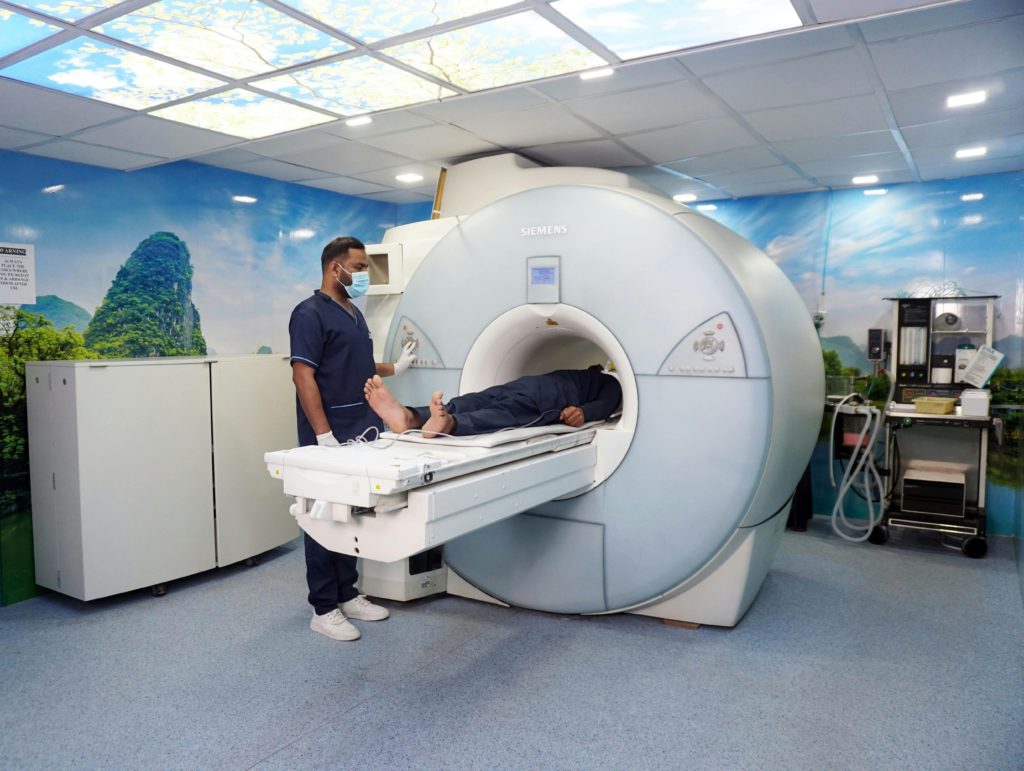
During the scan, the patient lies on a motorised table that slides into the MRI machine. The machine itself is a large, tube-shaped structure. While the process is painless, it can be noisy, with loud tapping or thumping sounds occurring as the machine operates. Patients are often provided with earplugs or headphones to make the experience more comfortable.
Remaining still is one of the most important aspects of the procedure. Movement can blur the images, which may require the scan to be repeated. Depending on the area being examined, the scan can take anywhere from 15 minutes to over an hour. Technicians monitor the process from a separate room and can communicate with the patient throughout.
Some patients may feel uncomfortable in enclosed spaces. For those with claustrophobia, options such as open MRI machines or mild sedation may be available. It’s important to discuss any concerns with the medical team beforehand so they can provide appropriate support.
After the scan, most patients can return to their normal activities immediately. If contrast dye was used, they may be advised to drink plenty of water to help flush it from the system. The images are then reviewed by a specialist, who prepares a report for the referring doctor.
Results are usually discussed during a follow-up appointment, where the doctor explains the findings and outlines any next steps. This may include further testing, treatment planning, or ongoing monitoring.
Overall, knowing what to expect can make the process far less intimidating. MRI scans are a safe and effective diagnostic tool, and with proper preparation, patients can approach the procedure with greater confidence and ease.
